Music has always been a reflection of human creativity and culture. From ancient instruments carved out of wood and stone to massive orchestras filling concert halls, each era has carried its own signature sound. Yet no change has been as dramatic or as revolutionary as the transformation brought by technology. Over the last century, and especially in recent decades, technological innovations have reshaped every aspect of music production. What once required expensive studios, large teams, and complex equipment can now be done on a laptop with affordable software.
Technology has not only changed how music is recorded and produced but also how it is distributed, consumed, and even created. This blog explores the remarkable journey of music production through technology, examining the tools, trends, and innovations that have forever altered the soundscape of our world.
The Early Days of Recording Technology
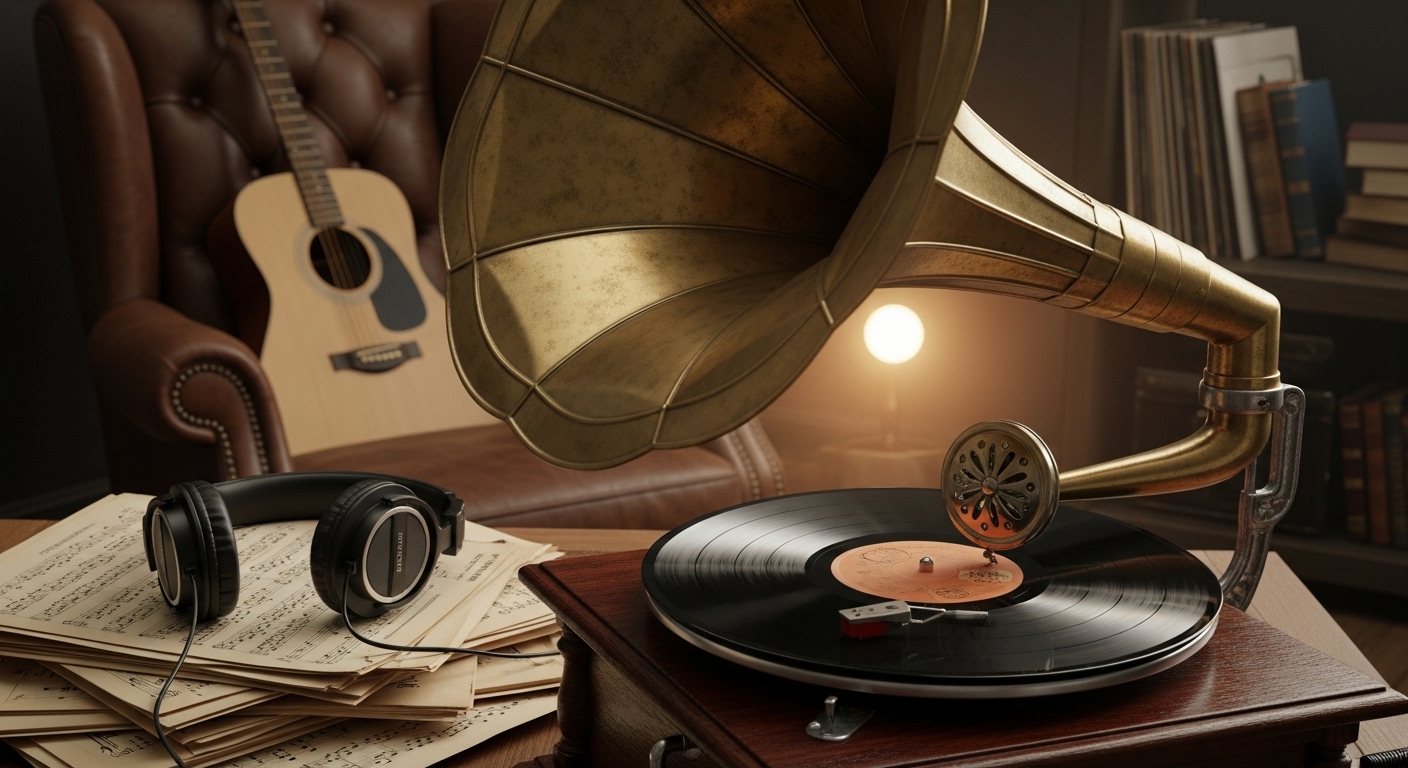
The first major breakthrough in music production came in the late 19th century with the invention of the phonograph by Thomas Edison. For the first time, sound could be recorded and replayed, forever changing how music was experienced. Musicians no longer had to rely solely on live performance to share their art. This invention laid the foundation for an industry that would grow beyond imagination.
As recording devices improved, so did the quality of the captured sound. Early gramophones and record players allowed households to enjoy music at home. By the early 20th century, record companies were thriving, and artists could reach wide audiences without touring endlessly. Technology had created a new platform, giving rise to commercial music production.
The Arrival of Multitrack Recording
One of the most important milestones in music production came in the 1940s and 1950s with the development of magnetic tape recording. Unlike earlier recording methods, tape allowed sound to be captured with much higher fidelity. More importantly, it introduced the concept of multitrack recording, pioneered by innovators like Les Paul.
Multitrack recording allowed producers to record separate instruments and vocals individually and then mix them together. This was revolutionary, as it gave musicians and producers more control over the final product. A singer could record vocals multiple times until they were perfect, or a guitarist could lay down several harmonies to create a richer sound.
This technology marked the beginning of the producer’s era. Producers were no longer just engineers but became creative visionaries shaping how music sounded. Legendary producers such as George Martin with The Beatles used multitrack recording to experiment with sounds, layering instruments and effects in ways that were impossible in a live setting.
Analog Equipment and Its Legacy
The mid-20th century was dominated by analog equipment, from reel-to-reel tape machines to mixing consoles filled with glowing knobs and faders. Microphones, amplifiers, and outboard gear like compressors and equalizers became the tools of the trade.
Analog equipment gave recordings a warmth and character that many still admire today. Even though digital technology has since taken over, producers often strive to replicate or incorporate the distinct sound of analog recordings. Vinyl records, for example, remain popular because listeners appreciate the unique tonal quality of analog playback.
This era of analog recording set the standards for professional studios. Large studios were filled with costly equipment, meaning only established artists or those backed by record labels could afford to produce music at a professional level.
The Digital Revolution
The late 1970s and 1980s brought about another monumental shift: the digital revolution. With the development of digital audio, sound could be captured as data rather than physical impressions on tape. This meant recordings could be edited with far more precision, and there was no loss of quality after multiple playbacks or edits.
Compact discs (CDs) emerged as the dominant format for consumers, offering cleaner sound than vinyl and cassette tapes. At the same time, studios began transitioning to digital recording systems. Early digital audio workstations (DAWs) allowed for unprecedented control in editing and mixing.
This was the beginning of modern music production as we know it today. Artists and producers were no longer limited by the constraints of analog tape. They could splice, copy, and rearrange recordings with ease, leading to more polished and complex productions.
The Rise of Digital Audio Workstations (DAWs)
Perhaps the single most significant advancement in music production came with the rise of DAWs in the 1990s and 2000s. Programs like Pro Tools, Cubase, Logic Pro, and later Ableton Live and FL Studio transformed music creation.
DAWs brought the entire studio into the computer. Musicians could record, edit, mix, and even master tracks from a single platform. Features like unlimited tracks, automation, and real-time effects gave artists the ability to experiment without limits. This democratized music production, allowing independent musicians to create professional-quality tracks from home.
The accessibility of DAWs also sparked new genres and production techniques. Electronic music, hip-hop, and pop increasingly relied on digital production methods. Producers could manipulate sounds in ways that were impossible in the analog era, pushing music into bold new directions.
The Influence of MIDI and Virtual Instruments
Alongside DAWs, the development of MIDI (Musical Instrument Digital Interface) in the 1980s changed the landscape of music production. MIDI allowed electronic instruments, computers, and synthesizers to communicate seamlessly. This meant that one keyboard could control multiple sounds, or an entire song could be sequenced digitally.
Virtual instruments soon followed, giving producers access to endless sounds and instruments without needing physical hardware. Today, libraries of sampled instruments allow producers to replicate entire orchestras, exotic instruments, or futuristic sounds with a few clicks.
This accessibility has not only lowered the cost of production but also expanded creative possibilities. A producer in a bedroom studio can now create film scores, orchestral arrangements, or electronic tracks that rival the work of massive studios.
The Transformation of Sound Design
Technology has also transformed sound design, allowing producers to manipulate audio in ways previously unimaginable. Tools like samplers, synthesizers, and audio plugins have opened the door to infinite creativity.
Producers can stretch sounds, reverse them, add layers of effects, or build entirely new sounds from scratch. Genres like electronic dance music, trap, and experimental hip-hop rely heavily on sound design, pushing boundaries of what music can be.
These innovations demonstrate how technology has not only changed production methods but also expanded the very definition of music itself.
Collaboration Across the Globe
Another massive change brought by technology is the ease of collaboration. In the past, musicians and producers needed to be physically present in a studio to work together. Today, thanks to high-speed internet and cloud-based platforms, artists can collaborate from anywhere in the world.
Producers in one country can send beats to vocalists in another, while mixing engineers across continents can polish a track without ever meeting the artist. This global connectivity has led to more diverse and innovative music, blending cultural influences in ways never before possible.
Affordable Home Studios
Perhaps the most democratizing effect of technology on music production has been the rise of affordable home studios. With nothing more than a laptop, a microphone, and some software, artists can now produce music that sounds professional.
This has leveled the playing field, allowing independent musicians to compete with major label artists. Platforms like SoundCloud and Bandcamp have further amplified this shift, enabling creators to share their work directly with listeners. The traditional gatekeepers of the industry—record labels and big studios—no longer hold the same level of control.
Auto-Tune and Vocal Processing
One of the most controversial yet influential technological developments in music production has been Auto-Tune and other vocal processing tools. Originally designed to correct pitch errors, Auto-Tune became an artistic effect in its own right. Artists across genres, from pop to hip-hop, have used it to create distinctive vocal styles.
While some criticize vocal processing for diminishing authenticity, others see it as a legitimate tool of creativity. Regardless of opinion, it is undeniable that technology has changed how vocals are recorded and presented in modern music.
The Role of Artificial Intelligence
In recent years, artificial intelligence has entered the world of music production. AI-powered tools can now compose melodies, suggest chord progressions, generate beats, and even master tracks automatically.
While AI has not replaced human creativity, it has become a powerful assistant for musicians and producers. It accelerates the production process and opens new avenues for experimentation. Some worry about the implications of AI in art, but many embrace it as another stage in the evolution of music-making.
Live Performances and Technology
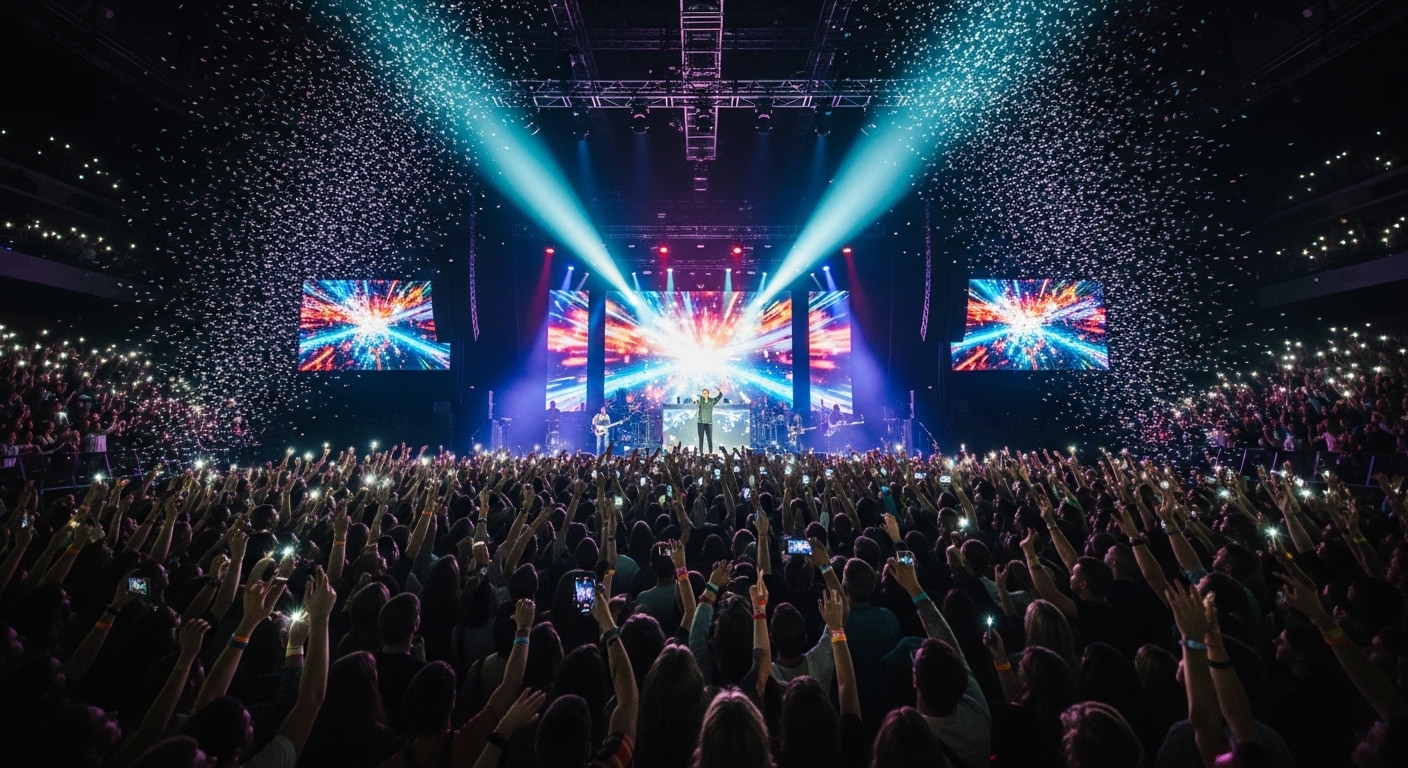
Technology has not only changed how music is produced but also how it is performed. From synthesizers and drum machines on stage to advanced lighting and visual effects, live performances have become immersive experiences.
Artists now incorporate live looping, digital instruments, and backing tracks into their performances. This blend of production and performance has created entirely new forms of musical expression, particularly in electronic and experimental genres.
Distribution and Streaming
No discussion of technology and music production would be complete without mentioning distribution. In the past, producing an album required physical distribution through records, tapes, or CDs. Today, streaming platforms dominate, giving artists instant global reach.
This shift has affected how music is produced. Songs are often shorter, designed for playlists and repeat plays. Producers now consider not just the sound of music but how it will perform on digital platforms. While streaming has created challenges for artist income, it has also democratized access to audiences worldwide.
The Impact on Genres and Creativity
Technology has blurred the boundaries between genres. Producers can combine elements from hip-hop, rock, jazz, classical, and electronic music seamlessly. This has led to a wave of genre-bending music that reflects the diversity of modern creativity.
Technology encourages experimentation, pushing artists to break rules and redefine what music can sound like. Many of today’s most popular genres would not exist without technological innovation.
Challenges and Criticisms
Despite its many advantages, technology in music production has not been without criticism. Some argue that the accessibility of production tools has led to an oversaturation of music, making it harder for artists to stand out. Others lament the loss of the organic feel of analog recordings.
Additionally, reliance on digital tools can sometimes lead to formulaic production, where songs sound similar due to overused presets and techniques. These challenges highlight the importance of balancing technology with creativity.
The Future of Music Production
Looking ahead, the future of music production will likely be even more integrated with technology. Virtual reality concerts, AI-driven composition, immersive 3D audio, and advanced interactive music experiences are already emerging.
As technology continues to evolve, the line between human creativity and machine assistance will blur further. What remains certain is that music will continue to adapt, reflecting both technological possibilities and human imagination.
Conclusion
Technology has completely transformed music production, reshaping every stage from recording and editing to distribution and consumption. From the invention of the phonograph to the rise of digital workstations and artificial intelligence, each innovation has expanded the possibilities of what music can be.
These changes have made music more accessible, diverse, and experimental, empowering artists worldwide to share their voices. While challenges remain, the relationship between technology and music production is one of ongoing evolution, driving creativity forward.
Music will always be a reflection of humanity, but thanks to technology, it is now also a reflection of our machines, our tools, and our ability to innovate. The story of music production is, in many ways, the story of technological progress itself.