
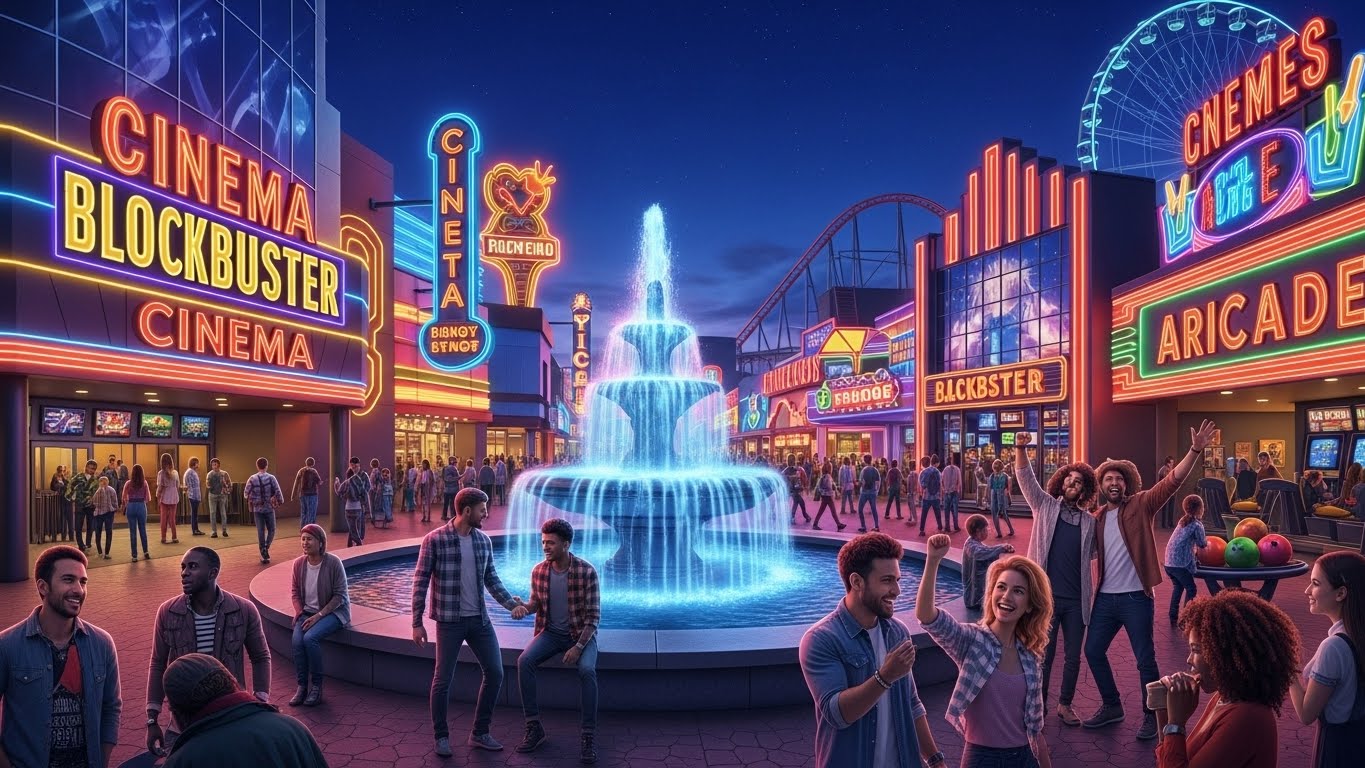
Entertainment has been an integral part of human society for centuries. It serves as both an escape and a mirror, reflecting cultural shifts, technological progress, and the changing desires of individuals and communities. As we move deeper into the digital age, the landscape of entertainment has undergone profound changes. The shift from traditional forms like theater, books, and television to the online, interactive experiences we now enjoy tells a story of technological advancement, cultural evolution, and an increasing appetite for convenience and personal control.
In this blog, we will explore the rich history of entertainment, the factors that have driven its evolution, and what the future holds for the entertainment industry. From its roots in ancient performances to the rise of streaming services, and even the potential of virtual reality, the journey of entertainment is one of constant transformation.
The Birth of Entertainment: Ancient Traditions and Cultural Foundations
Entertainment, as a concept, can be traced back to ancient civilizations. Early humans engaged in storytelling, music, and dance, all of which were fundamental forms of communication and expression. From the epic poems of Homer in ancient Greece to the dances performed by indigenous peoples around the world, early forms of entertainment were deeply tied to cultural rituals, religious ceremonies, and communal bonding.
Theater, in particular, played a central role in ancient entertainment. The Greeks and Romans were pioneers in shaping the modern understanding of drama and performance. The establishment of theaters, like the famous amphitheaters in Greece and Rome, laid the groundwork for what would become one of the most popular forms of entertainment in human history. These early performances were not only entertaining but also served as a medium for exploring political, social, and philosophical ideas.
In parallel, storytelling traditions in various cultures developed into written forms, with early literature such as the “Mahabharata” and the “Epic of Gilgamesh” contributing to the cultural richness of their respective societies. Over time, the evolution of art forms such as music, theater, literature, and dance began to shape how people engaged with entertainment in a more structured manner.
The Rise of Mass Entertainment: Theater, Cinema, and Television
The next major shift in entertainment came with the industrial revolution and the birth of mass entertainment. With the advent of printing presses, books became more widely accessible, and literacy rates increased across Europe and the Americas. This led to a flourishing of literature in the 18th and 19th centuries, with authors like Charles Dickens and Jane Austen captivating the masses with their novels. Books became a primary source of entertainment for those who could afford them.
Simultaneously, the rise of the theater saw the emergence of renowned playwrights such as William Shakespeare and Molière, whose works continue to be celebrated today. Theater became more than just a pastime for the elite; it became a communal experience where people from all walks of life could come together to witness live performances, ranging from comedies to tragedies.
But the true game-changer in the entertainment industry was the invention of cinema. The late 19th century saw the birth of film as a new medium for entertainment. Early pioneers such as Thomas Edison and the Lumière brothers made significant contributions to the development of motion pictures. By the early 20th century, Hollywood had established itself as the center of the global film industry, creating a new form of storytelling that captivated audiences worldwide.
The advent of television in the 1940s marked another pivotal moment in the history of entertainment. With the ability to broadcast live events, television became the primary source of entertainment in households across the globe. Shows like “I Love Lucy” and “The Twilight Zone” captured the imagination of viewers, while news programs brought the world into living rooms.
Television introduced the concept of “appointment viewing,” where audiences would gather at specific times to watch their favorite shows. This era saw the rise of iconic television personalities and the creation of legendary series that remain staples of popular culture today.
The Digital Revolution: Streaming and On-Demand Entertainment
The turn of the 21st century brought with it the rise of the internet, and with it, a profound shift in how entertainment was consumed. The internet revolutionized everything, from the way people accessed information to the way they enjoyed movies, television, and music. The once-powerful dominance of traditional television began to fade, as on-demand services became more popular.
The early 2000s saw the birth of digital entertainment platforms like Napster, which introduced peer-to-peer file sharing, followed by streaming services like YouTube and iTunes. However, it was the rise of subscription-based streaming services like Netflix, Hulu, and Amazon Prime Video that really disrupted the entertainment industry.
Streaming services allowed people to watch their favorite shows and movies anytime, anywhere, and on any device. No longer did viewers have to schedule their lives around television broadcast times; instead, they could watch entire seasons of shows in one sitting. This shift gave birth to a new era of content consumption—one in which convenience and accessibility took precedence.
As a result, streaming platforms became major powerhouses in the entertainment world, producing original content that rivaled traditional film and television studios. Netflix, for instance, revolutionized the concept of “binge-watching” with its wide array of shows such as Stranger Things, The Crown, and Money Heist, all of which became cultural phenomena. The success of these shows demonstrated the growing power of streaming platforms in shaping global pop culture.
The Rise of Interactive Entertainment: Video Games and Virtual Reality
While streaming and on-demand services have transformed passive forms of entertainment, the world of interactive entertainment has experienced an explosion in recent years. Video games, which have been around since the 1970s, have evolved from simple arcade machines to highly complex, immersive experiences. In the 1980s and 1990s, console games such as Super Mario and The Legend of Zelda helped establish video gaming as a mainstream pastime. Today, the gaming industry is larger than both the film and music industries combined.
The advent of online multiplayer games, virtual worlds like World of Warcraft, and esports competitions have further transformed gaming into a competitive, social, and spectator-driven industry. Gamers can now connect with others around the world in real-time, forming communities that transcend geographic boundaries.
But the next frontier in interactive entertainment lies in virtual reality (VR). VR has the potential to create fully immersive, interactive worlds where players can experience stories and environments in ways never before possible. From VR video games to virtual concerts and even VR cinemas, the potential applications of this technology are vast and still largely unexplored. As VR technology becomes more affordable and accessible, it’s poised to redefine what entertainment means in the coming decades.
The Future of Entertainment: Artificial Intelligence and Beyond
Looking ahead, the future of entertainment seems to be headed in the direction of greater personalization, interactivity, and immersion. With advancements in artificial intelligence (AI), machine learning, and data analytics, entertainment providers will be able to create even more tailored experiences for users. Personalized recommendations, AI-generated content, and interactive storytelling are just the beginning of what’s possible.
One exciting development in AI is its potential to assist in content creation. We are already seeing AI tools being used to generate music, write scripts, and even create artwork. As AI continues to improve, it may even have the ability to generate entire films or TV shows, blurring the lines between human and machine-created content. Additionally, AI-powered avatars and characters could revolutionize video games, making them even more lifelike and responsive to player actions.
Another area of innovation is the integration of augmented reality (AR) with entertainment. AR is already being used in mobile games like Pokémon Go and in social media filters, but its potential extends far beyond this. In the near future, AR could be used to create interactive experiences in real-world environments, transforming how we experience movies, concerts, and even everyday life.
Conclusion: Entertainment for the Digital Age
The journey of entertainment has come a long way since its humble beginnings in ancient rituals and storytelling. Over the centuries, it has evolved alongside human society, driven by technological advancements and cultural shifts. From theater to cinema, from television to streaming services, and from passive viewing to interactive gaming, the ways in which we engage with entertainment have been transformed by innovation.
As we look to the future, the potential for further advancements in entertainment is boundless. Technologies like virtual reality, artificial intelligence, and augmented reality will continue to shape the industry, providing even more immersive and personalized experiences. However, despite the ever-changing landscape of entertainment, one thing remains constant: the universal human desire for connection, escape, and expression. Whether through a live theater performance, a thrilling video game, or a virtual concert, entertainment will continue to evolve, but its core purpose will remain the same: to inspire, engage, and bring people together.
As we embrace the entertainment of tomorrow, it is clear that the future of leisure will be more interactive, immersive, and digital than ever before. The possibilities are exciting, and we are only just beginning to scratch the surface of what the next generation of entertainment has to offer.